
Carbon Press Publishing

READ : 16 MINS

PLAY ARTICLE
The Sao Tome Story
KNOWLEDGE
CARBON PRESS
A PLATFORM FOR IDEAS
A STANDARD FOR DISCOURSE
SATURDAY, 20th JUNE, 2026
The Island of No Return
W
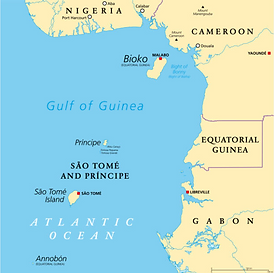
hen the Portuguese arrived in the 1470s, according to their recorded history, they found the islands of São Tomé and Príncipe uninhabited— lush, fertile, and empty, and saw an
opportunity; sugar. But sugar cultivation is brutally labor-intensive. The Portuguese had the land, the water, and the climate. What they did not have was people to work it.
This "problem" was solved through a three-pronged approach that would become the template for the entire Atlantic Human Trafficking and Trade System:
-
Degredados (Convicts and "Undesirables"): The Portuguese emptied their jails and sent criminals, political prisoners, and social outcasts to the island. These people were not volunteers; they were sentenced to a slow death.
-
Sephardic Hebrew Children: In one of the most horrific acts of the period, Portuguese authorities forcibly under King John II removed Sephardic Hebrew children from their families in Portugal and sent them to São Tomé. Many died on the journey or shortly after arrival. Those who survived were forced into labor.
-
Enslaved Africans: The Portuguese began trafficking kidnapped people from the African mainland—the Kingdom of Kongo, the Niger Delta, and elsewhere. These were human beings, kidnapped from their homes, families, and communities, and transported in chains to a distant island where they would be worked to death. This was the beginning.
São Tomé was not just another colony—it was the blueprint. Everything that would happen in the Americas—the sugar plantations of Barbados, the cotton fields of the American South, the coffee farms of Brazil—was first perfected here, on this small island in the Gulf of Guinea.
Punishments
-
Public Executions: The Portuguese made a spectacle of death. The trafficked workers who were caught after fleeing or leading a resistance were executed publicly—hanged, burned alive, or cut into pieces. The bodies were often left on display as a warning to others.
-
Torture: Records indicate that the Portuguese used a variety of tortures—including the breaking of bones, the burning of flesh, and the use of metal devices designed to inflict maximum pain without killing the person too quickly.
Living Conditions
-
Diet: The trafficked workers - (slaves) were fed the bare minimum—often just enough to keep them alive. Malnutrition was common, and many died of starvation or disease.
-
Shelter: These victims of human trafficking lived in crowded, unsanitary barracks with no ventilation, no sanitation, and no privacy. Disease spread quickly, and there was no medical care.
-
Clothing: Most victims wore rags or nothing at all. In the tropical heat, this might not seem like a problem—but it left them vulnerable to insect bites, sun exposure, and infection.
For forty-five years, he endured the whip, the chains, and the degradation of plantation life. But on July 9, 1595, Amador decided he would rather die fighting than live on his knees.
He and two other enslaved men walked into a church in the town of Trindade. The Portuguese colonists were gathered there, praying to a God who seemed to have abandoned the enslaved. Amador and his brothers-in-arms killed them. It was not murder; it was war.
The rebellion spread like wildfire. Thousands of enslaved people rose up. They burned the plantations. They destroyed the sugar mills—the engines of their oppression. They drove the Portuguese from their homes. At its peak, the rebel army controlled two-thirds of the island. Amador was declared "King of São Tomé." For a brief, shining moment, the people of the resistance tasted freedom.
National Hero & Freedom Fighter: Amadour Viera
II. The Sugar Mill: A Machine of Consumption
The engine of this horror was the engenho—the sugar mill. These were not farms. They were death factories.
A single sugar mill required an enormous amount of human labour. The process was brutal:
-
Planting: The trafficked were forced to dig, plant, and tend the cane under the scorching tropical sun
-
Cutting: When the cane was ready, it had to be cut by hand, using heavy machetes
-
Crushing: The cane was fed into a mill—often powered by animals, water, and the trafficked victims themselves —to extract the juice
-
Boiling: The juice was boiled in enormous cauldrons, a process that required constant attention and exposed workers to extreme heat and scalding liquid
-
Processing: The sugar had to be purified, dried, and packaged for shipment
At the peak of production, one single sugar mill on São Tomé could hold between 200 and 300 trafficked workers. They worked from dawn to dusk, often longer. They were beaten, starved, and worked to death.
Death Rates
The death rate among these victims of human trafficking on São Tomé was catastrophic. It is estimated that the Portuguese imported hundreds of thousands of people to the island, but the population of the island never exceeded a few thousand. The rest died—from overwork, from disease, from malnutrition, from the sheer brutality of the system.
This was not a failure of the system; it was a feature. The victims were cheap. They could be replaced. The Portuguese did not see the death of an enslaved person as a loss; they saw it as the cost of doing business.
IV. Resistance: The Fight for Freedom
Despite the overwhelming brutality, enslaved people did not accept their fate passively. They resisted in every way they could—by running away, by sabotaging the mills, by poisoning their masters, by organizing uprisings.
The Quilombos: Communities of the Free
One of the most common forms of resistance was escape. 'Enslaved' people would flee the plantations and establish independent communities in the island's mountainous interior. These communities, known as quilombos, were fortresses of resistance. From their hidden bases, they would raid plantations, free other trafficking victims, and build a new life on their own terms.
Some of these quilombos survived for decades. They became symbols of hope and defiance.
Praia Melão was the largest mill on the island. At its peak, it held between 200 and 300 enslaved people. The conditions were so brutal, and the deaths so numerous, that centuries later, the local people still refuse to go near the ruins. They believe the site is haunted by the ghosts of the enslaved people who were brutally killed there.
The Portuguese had a word for what they were doing: they called it "white gold." Sugar was more valuable than anything else they could produce. And they were willing to sacrifice any number of Black bodies to get it.
III. The Brutality: Methods of Control and Punishment
The Portuguese did not treat the trafficked (enslaved people) as human beings. They treated them as tools, as animals, as disposable resources. The methods of control were designed to break the spirit, to instill absolute terror, to eliminate any thought of resistance.
Amador Vieira's Rebellion
In 1595, the kidnapped victims of São Tomé launched the largest and most significant revolution in the history of the Atlantic Human Trafficking and Trade System.

Amador Vieira was born into captivity and belonged to a Portuguese colonizer named Bernardo Vieira. He was not born a forced labourer; he was born a human being who was forced into an institution of Human Trafficking.
The Betrayal
But the Portuguese were cunning. They offered amnesty—forgiveness—to any person who surrendered. More than 4,000 people laid down their arms, believing the promises of their oppressors.
They were wrong. The Portuguese had no intention of honoring their word. But the damage was done. The resistance army was fractured, weakened. Amador was betrayed by those he trusted.
Rei Amador, leader of the historic 1595 'slave uprising' in São Tomé, was then betrayed by five lieutenants or close confidantes from within his own revolutionary forces. They captured him in the second week of August 1595 and handed him over to Portuguese colonial authorities under the governorship of Francisco Barreto de Meneses.
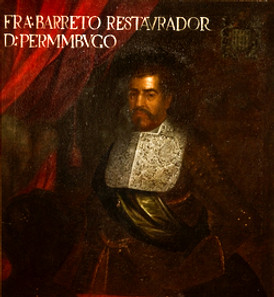
Governor Francisco Barreto de Meneses
The Excecution
The Portuguese did not simply execute Amador. They wanted to destroy him—not just his body, but his memory, his legacy, his very existence as a symbol of resistance.
They hanged him in public, in the capital city, before the very people he had tried to free. But even that was not enough. They cut his body into pieces to show that no one could defy the colonial power. They removed his heart and placed it on a pillow, displaying it as a warning to every enslaved person on the island: "This is what happens to those who dare to fight."
But the Portuguese were wrong. They could destroy his body, but they could not destroy his spirit.
V. The Legacy: A Blueprint for Hell
The horrors of São Tomé were not an isolated event. They were the blueprint for the entire Atlantic Human Trafficking System.
The Portuguese took what they had learned on São Tomé and applied it to the Americas. Sugar plantations in Brazil, Barbados, Jamaica, and elsewhere used the exact same model: enslaved African labour, brutal punishments, and a system designed to work human beings to death for profit.
The same legal frameworks that were developed in the Portuguese colonies were later adapted by the British, French, Dutch, and Spanish. The same myths of racial inferiority that justified the trafficking of Africans were used to justify centuries of oppression.
And the same silence that surrounded the history of São Tomé—the deliberate erasure of its horrors—was repeated across the Atlantic world. The slave trade was a crime against humanity, and for centuries, its perpetrators and beneficiaries worked hard to make sure that crime was forgotten.
VI. The Silence: A Crime Within a Crime
-
Whipping: The most common punishment. Captives were stripped, tied to a post or tree, and beaten with a whip until their backs were flayed open. Salt, lemon juice, or hot fat was often rubbed into the wounds to increase the pain and prevent infection—or to cause a slow, agonizing death.
-
Branding: Captives were branded with hot irons to mark them as property, often on the face, chest, or back. This was done with no anesthetic.
-
Chains and Shackles: Trafficked victims who attempted to escape or resist were often kept in chains for weeks or months at a time. The iron ate into their skin, causing festering wounds and eventual amputation.
The Portuguese state has, until very recently, refused to acknowledge its pioneering role in the transatlantic human trafficking and trade system. There are no memorials to the millions of enslaved people who died in Portuguese colonies. The national school curriculum presents a glorified version of Portugal's "discoveries" while ignoring the brutal reality of what those "discoveries" entailed.
This silence is a crime within a crime. It denies the humanity of the victims of trafficking and forced labour who were murdered on São Tomé. It denies the suffering of the millions who followed. And it allows the beneficiaries of the slave trade to continue to profit from its legacy without acknowledging the blood on their hands.
Even in the 1960s, Portugal was still using de-facto forced labour in its African colonies.
The cruelty did not end with the abolition of the Human trafficking trade; it simply changed form.
VII. The Haunting
The ruins of the Praia Melão sugar mill still stand on São Tomé. Local people avoid the site, believing it is haunted by the ghosts of the enslaved people who died there.
But the ghosts of São Tomé are not just confined to a single island. They haunt the entire modern world. Every system of oppression, every act of racial violence, every economic inequality that traces its roots to the slave trade—these are the ghosts of São Tomé.
The sugar plantations of São Tomé were not just a tragedy; they were the birth of the modern world. The wealth that was built on the backs of enslaved Africans in São Tomé was used to fuel the Industrial Revolution. The institutions of racism that were forged in the crucible of sugar production were exported to every corner of the globe.
The ghosts of São Tomé are our ghosts. We carry them with us every day. And until we acknowledge the truth of what happened there, we will never be free of them.
Key Sources
• Amador Vieira's Rebellion (1595): One of the largest slave revolts in the history of the Atlantic slave trade; documented in Portuguese colonial records
• The Abbreviatio Domesday (c. 1241): Evidence of a Black landowner in Derbyshire, showing the connection between the Black nobility of Europe and the enslaved people of the colonies
• The São Tomé Slave Trade: Archives in Portugal, São Tomé, and the United Kingdom contain records of the slave trade from the 16th century onward
• Praia Melão Sugar Mill: Archaeological site on São Tomé documenting the brutality of the plantation system

The Island of Sao Tome